Tuesday, October 13, 2026 1:30-2:30PM
Panel: Who Sets the Terms? AI Governance as Geopolitics
Sovereignty is now the most used word in AI policy and the least supported by anything material. The AI Act made Europe the first jurisdiction to legislate comprehensively, and it is now cited in every direction: by American deregulators as a cautionary tale, by other governments as a template they lack the capacity to implement, by some European industry as the sole reason it cannot compete, and by European institutions as evidence of leadership. All there readings can be true at once, which is the problem. Most states govern systems they cannot inspect, running on compute they do not own, trained on data they never saw. This panel asks what is actually being decided, where, and by whom, and whether the answer is compatible with anything we would recognise as democratic authority.
Moderator: Prof. Dr. Virginia Dignum,
Wallenberg Chair, Professor Responsible Artificial Intelligence and Director, AI Policy Lab AI Policy Lab | Department of Computing Science at Umeå University, Sweden
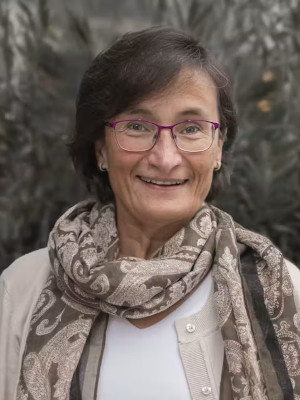
Bio: Virginia Dignum is Professor of Responsible Artificial Intelligence at Umeå University, Sweden, where she leads the AI Policy Lab. She is also senior advisor on AI policy to the Wallenberg Foundations and chair of the ACM’s Technology Policy Council. She has a PHD in Artificial Intelligence from Utrecht University (2004), was appointed Wallenberg Scholar in 2024, is member of the Royal Swedish Academy of Engineering Sciences (IVA), and a Fellow of the European Artificial Intelligence Association (EURAI), and of ELLIS (European Laboratory of Learning and Intelligent Systems). She is also co-chair of the IEEE Global Initiative on Ethics of Autonomous and Intelligent Systems 2.0, member of the UNESCO’s expert group on the implementation of AI recommendations, the OECD’s Expert group on AI, and founder of ALLAI, the Dutch AI Alliance. She has been a member of the United Nations Advisory Body on AI, the EU’s High Level Expert Group on Artificial Intelligence, co-chair of the WEF’s Global Future Council on AI, and leader of UNICEF’s guidance for AI and children. In 2026, she received the Nordic DAIR Awards Lifetime Achievement in AI. She has over 300 peer-reviewed articles in major international journals, conferences and workshops with in total over 30000 citations. Her new book “The AI Paradox” (2026) is published by Princeton University Press.
Introductory Keynote: Kim van Sparrentak, Member of the European Parliament on behalf of the Groenlinks-PvdA delegation in the Greens/EFA
Bio: Kim van Sparrentak is a Member of the European Parliament on behalf of the Groenlinks-PvdA delegation in the Greens/EFA. She is Co-Chair of the LGBTIQ+ Intergroup, a member of the Committee on Internal Market and Consumer Protection, as well as a substitute in the Committee on Employment and Social Affairs. Kim’s focus is on the human element in digitalisation, as well as digital sovereignty. She was negotiator for the Greens group on the AI Act, the Platform Work Directive and Parliament’s lead negotiator on the Short-Term Rental Regulation and the own-initiative report on Addictive Design.

Panelist: Dr. Melody Musoni, Senior Digital Policy Analyst at ECDPM (the European Centre for Development Policy Management)
Bio: Melody Musoni is a senior digital policy analyst at ECDPM, where she leads research projects on the African digital economy. She holds a PhD in Law (Cybercrime), a Master’s Degree in CyberLaw, a postgraduate diploma in Environmental Law, and an LLB degree from the University of Witwatersrand. She has published several academic papers and book chapters on topics including digital sovereignty, digital IDs, digital public infrastructure (DPI), artificial intelligence governance, and data protection. She actively engages with African and European policymakers on data and AI governance and previously assisted the SADC Secretariat with its data protection and compliance programs. She has over a decade of experience in legal practice, specializing in ICT law, data protection, and information security.

Panelist: Paul Verhagen, Senior Fellow, Geopolitics and Technology at The Hague Centre for Strategic Studies
Bio: Paul Verhagen (1991) is a Dutch-American-Chinese Senior Fellow at The Hague Centre for Strategic Studies on technology and geopolitics . He is the author of The Techtonic Shift, which argues that technological change has rendered our political institutions anachronistic, and that the return of geopolitics leaves little time to rebuild them. He comments regularly in Dutch and international media. His background is interdisciplinary, spanning theoretical physics, philosophy, artificial intelligence, and geopolitics.

Panelist: Jimena Sofia Viveros Alvarez, Founder and CEO of IQuilibriumAI and President of The HumAIne Foundation
Bio: Jimena Sofia Viveros Alvarez is a senior international lawyer, AI governance expert practitioner whose work bridges international security, international humanitarian law, and emerging technology policy. She is the Founder and CEO of IQuilibriumAI and President of The HumAIne Foundation, and was appointed as a Member of the United Nations Secretary-General’s High-Level Advisory Body on Artificial Intelligence and as a GC-REAIM Commissioner, serving as Co-Lead for Peace and Security in both collegial bodies, Deputy Lead on the International Law Association Committee for AI and Technology Law, and Senior AI Expert at the OECD, UNESCO, ITU, ICRAC, CyberPeace Institute, among others. She served the Mexican Government in senior leadership positions as Director General and Head of International Affairs at the Ministry of Security, Tax and Finance Federal Prosecutors’ Office, and Head Legal Advisor and Chief of Staff at the Federal Judicial Council and the Supreme Court. Her work focuses on the governance and accountability gaps generated by dual-use AI technologies across the military, law enforcement, and civilian domains, with particular attention to Global South deployments and to building inclusive, operationalizable multilateral frameworks. She has facilitated multistakeholder dialogue across governments, defense establishments, civil society, and industry, and is a widely published author and has presented at over 100 major international fora, and awaits her doctoral dissertation defense on dual-use AI governance this year.

Panelist: Matthias Spielkamp, Founder and Executive Director of AlgorithmWatch
Bio: Matthias Spielkamp is founder and executive director of AlgorithmWatch, a civil society organisation based in Berlin and Zurich. It advocates for algorithmic systems and AI that make societies more just, democratic, inclusive and sustainable. Matthias is a member to the European Commission’s AI Act Advisory Forum and testified before committees of the Council of Europe, the European Parliament, the German Bundestag and other institutions on automation and AI. He holds master’s degrees in Journalism from the University of Colorado in Boulder and in Philosophy from the Free University of Berlin.